



Flowers
Prairie Garden Seeds
Message Board

Ordering

Last Word

Links

Family Matters

Home

Tomato Family

I am just starting to increase the number of Canadian tomato cultivars I am offering. More gardeners are growing heritage and local cultivars and the Canadian Tomato Project is part of this process. Thank you to participants in the Project for providing some of the seed in this list. I hope you will all grow some Canadian tomatoes, save seed and share it with others. I would also encourage you to record your observations and send them to me or to the Seeds of Diversity office. For information go to the SoDC website www.seeds.ca. Buying the seeds on this list will also contribute to the Canadian Tomato Project financially as $1.00 from the purchase price of each packet will go to Seeds of Diversity. Last year you purchased about 300 packets of Canadian tomatoes from this list.


Canadian Tomato Cultivars

Canadian Tomatoe


TOMATOES

(Lycopersicon lycopersicon) – There are so many varieties of tomatoes available, and you have been so generous in sending me seeds of your favourite variety, that I am not catching up on testing the 100 or so varieties in my collection. Despite this I am encouraging you to grow your own tomato seed and, with careful selection over the years, you may develop a variety that is more suited to your growing conditions.

If you do not see a variety that you want, ask and I might have some on hand. If you can grow vine ripened tomatoes you can grow tomato seed. To get the best seeds you should pick the fruit when it is somewhat overripe but not going bad. Mash it and put it in a small container of water. Stir or shake every day; after a few days it will have fermented and the seeds will be clean. The good seeds will sink to the bottom, the pulp and immature seeds will float to the top, making for easy separation. At room temperature fermentation takes about three days, but this may vary depending on the temperature and the ripeness of the tomatoes. The length of fermentation time is critical since too much fermentation will cause the seeds to sprout and not enough time will not clean the seeds properly. Spread the seeds on paper and air dry thoroughly. Store in a cool place and the seed will germinate well for at least five years.

EARLY, DETERMINATE
WHIPPERSNAPPER is ready before any others. This cherry tomato produces pinkish red oval fruits with a good sweet flavour. The plants sprawl flat on the ground and are literally covered with tomatoes. KIMBERLEY is a fairly tall, sprawling determinate tomato with potato leaves. Fruits are about 1" and yield is moderate. It is a selection made in the early 1950's by John de Roque of Kimberley BC from an accidental Siberia x Tiny Tim. This year it was a couple of days earlier than Whippersnapper. The Sub-Arctic series of tomatoes was developed in Alberta for short season gardening. They are considerably larger than cherry tomatoes and take about the same number of days to mature. SUB-ARCTIC PLENTY is a few days earlier than Tiny Tim, and SUB-ARCTIC MAXI is a few days later, with fruits 3 to 4 times as big. ROCKET (Ag Canada Exp. Farm, Lacombe, AB, 1967) was released in our centennial year and initially called Centennial Rocket. It is a fairly small-fruited early cultivar. RUSSIAN SASK was brought to this province by early Russian immigrants. Produces 1"--1½" round, slightly flattened red fruits on very small plants and is very early. Thanks to Tanya of Heritage Harvest Seed for collecting this tomato. GLACIER is an early cold-tolerant variety originating in Sweden. RUSSIAN is a tomato that is almost as early as the Sub-Arctics but has considerably larger fruit. POLAR BABY is apparently from Alaska. It is similar in maturity to the Sub- Arctics but has surprisingly large fruit for an early tomato. ALPHA is similar to Polar Baby but the plants are larger and much heavier producers.

There has been a fair amount of interest shown in the SIBERIAN tomato. The round, bright red tomatoes are small to medium-sized and are produced on sturdy, upright, bright green plants. This variety is very tolerant of cool growing conditions. FIR TREE has carrot like leaves and compact plants. The fruits are mediumsized and fairly early. COLDSET (Ontario Ag. College, Guelph, 1961) produces medium-sized fruits and was bred to perform well in cold climates.

MAIN CROP, MOSTLY DETERMINATE
SCOTIA was bred at Kentville, NS, and named in 1956. It is a determinate variety producing medium-sized fruit. Very early and adapted to short season cool areas. CABOT (1975) is a selection from a Scotia cross. Determinate plants are productive and early under cool growing conditions. EARLY LETHBRIDGE VR was released from the Ag. Canada Experimental Farm in Lethbridge in 1953, with the verticillium resistance (VR) added shortly after by the work of Denby & Woolliams in Summerland, BC. This is a fairly early cultivar with medium-sized fruits, round to slightly pointed. HARROW (1951) was bred by Ag Canada at Harrow, ON. The large determinate plants give a good yield of medium-sized fruits that are resistant to cracking. MOIRA (1972), and the following cultivars, came from the Smithfield (ON) Experimental Farm where Jack Metcalf was in charge of tomato breeding. EARLIROUGE (1977) and EARLIBRIGHT (1980) have compact plants and give a good yield of round, red, medium-sized fruits, ripening quite early. Earlibright is the earlier of the two but Earlirouge has the larger fruits.

RIDEAU, which was trialed as Ottawa 28, is a selection from Meteor x Urbana made at the Central Experimental Farm in Ottawa and named in 1962. The determinate vine gives a heavy yield of medium-sized red fruit and ripens mid-season. VINELAND BRIGHT comes from the Horticultural Experimental Station (HES) Simcoe, ON, probably released in the 1960's. It produces medium to large, slightly pointed red fruits with quite solid flesh. EARLY RUTGERS is an early selection of Rutgers (New Jersey Ag. Exp. Stn., 1934). It produces medium large, intense red fruits on semi-determinate plants. At one time most of the processing tomatoes in the USA were Rutgers. The strain I am offering was selected by Ernie Kerr at the Hort. Exp. Stn., Simcoe, ON. EARLY CHATHAM (1943) is a mid-season variety with 2" fruit that was bred in Michigan by Dr. Yeager. BOUNTY (N. Dakota Ag. Exp. Stn., Fargo, 1941) is a maincrop tomato producing medium-large red fruits on determinate plants. VICTOR (AAS 1941) is a mid-season tomato with compact plants and medium-sized fruits. CANADA NORTHSTAR is in the Canadian gene bank collection but I have no idea what its origins are. It produces round to slightly oval red fruits, 1" -- 1 1/2" in diameter. The fruit has two locules (seed cavities), thick walls and good flavour.

About 1900 W. J. Macoun at the Dominion Experimental Farm in Ottawa started making selections from Sparks' Earliana, mainly for early maturity and heavy yield. This selection was carried on for about 10 years and resulted in ALACRITY, the first tomato cultivar named in Canada. It produces medium-large red fruits, mid-season in maturity. HERALD (1926), also from Ottawa, is a selection from Alacrity x Hipper. The somewhat flattened red fruits are 2"-3" in diameter and mature a week or so earlier than Alacrity. In 2006 I found one cluster of fruits on one plant of Herald that had lighter coloured fruits. I saved this seed separately and planted a patch in 2007 so now I am offering PINK HEREALD, the same as the original but with pink fruit and a clear skin.

LARGE RED was one of the first commercial tomato cultivars offered in the USA. The Shakers were selling it through their catalogue around 1830 and by the 1860's it was the most commonly grown tomato in the country. The round red mediumlarge fruits are borne on compact fairly upright plants and mature late mid-season.

KANATTO is a selection from a wild Philipino tomato with intense crimson colour which was made by Professor T. Graham of OAC, Guelph, ON. It is a late large indeterminate cultivar. Using the high crimson gene Professor Graham developed High Crimson (1963). I am offering EARLY HIGH CRIMSON with fairly early, fullsized somewhat flattened red fruits, and probably a selection of High Crimson.

SUMMERJET (1970) is a selection from Vinered x Summerdawn. It is part of L.G. Denby's breeding program begun in the early 1950's in Summerland, BC, to increase Verticillium wilt resistance in commercial tomatoes in the Okanagan. SUGAWARA was bred by James Sugawara, a Japanese immigrant who market-gardened in Vernon from the late 1920's until about 1950. He bred his tomato in the late 1930's. It was one of the local cultivars into which was bred Verticillium resistance by Denby & Woolliams (Summerland, BC) in the early 1950's.

As I look on myself as a regional seedsman, I try to offer a good selection of prairie bred tomatoes. The following are all mid-season with a good yield. SWIFT (1961) is the earliest with round fruits a bit larger than a golf ball. MELFORT (1973) has large determinate plants which give a heavy yield of flattened, beefsteak- type fruits. Ripening is early mid-season and mature colour is orange-red. BROOKPACT (1970's) is intermediate with very compact plants. KEYSTONE (1978) comes from George Luther's tomato breeding program at U. of Manitoba. Produces a good yield of red fruits and is quite early. PEMBINA (1973) was bred at Portage La Prairie, MB. Also a good yielder and fairly early but the fruits are smaller than Keystone. PRAIRIE PRIDE (1978) and MANITOBA (1956) are the latest with the largest fruits.

MAC PINK (1973) was bred by Chong, Bible, and Gyapay at Macdonald College of McGill University. Pink tomatoes are popular in Quebec but the varieties available at that time were all rather late. Mac Pink is an early determinate variety with quite large open plants. The medium-sized pink/red fruits are round and smooth and the yield is good.

James Baggett has done wonderful breeding work at Oregon State University, especially in tomatoes and peas. I have been growing his OREGON SPRING for a number of years and am very happy with it. It is nearly full sized and very early, and the first fruits are seedless. A more recent release is SILETZ which is nearly identical to Oregon Spring but the fruits are much larger and perhaps slightly earlier maturing. LEGEND (2000) is the most recent release from Dr. Baggett. It is quite early, large-fruited, with many early fruits seedless, and some resistance to late blight.

In the 1960's and '70's Roger Doucet led a tomato breeding program in Quebec which tried to breed varieties that tolerated cool nights in spring. He released twelve cultivars with "-bec" in their name and I am now offering seven of them. PRECOCIBEC is quite early and produces a good yield of medium sized fruits. MASKABEC, from Precocibec and Canabec, is quite early with good cold setting ability. The medium-sized fruits are very red and show little tendency to crack. ITABEC has Precocibec as one its parents. It produces a heavy yield of mediumlarge fruits and is fairly early. YORKBEC has New yorker as one its parents. It produces a heavy yield of medium-sized fruits in early mid-season and is resistant to cracking. CANABEC SUPER (1975) produces smooth round fruits of an intense red colour on medium-size determinate plants. CANABEC ROSE has pink (or at least light red) medium-sized fruits. The plants are large and maturity is mid season. ROSABEC is similar but slightly later with larger fruit.

QUEBEC #13 is one of a series of numbred cultivars released by J. O. Vandal in the 1950's and ‘60's. It produces medium-large round red fruits on tall plants and is a bit late maturing. SAVIGNAC, which is also known as Dufresne, was given by Raymond Dufresne of Joliette to Frère Armand Savignac CSV in the 1930's. The indeterminate plants are mid-season in maturity, and give a good yield of 3" fruits. MONTREAL 61 produces small to medium, round, red, very uniform fruits on a fairly compact plant. Maturity is fairly early. The seed came to us from the USDA who got it from a Mr. Bramhill of Simcoe, ON, in 1956.

The following three varieties have compact plants which could be grown in 12"-15" pots. The plants are very vigorous with sturdy upright stems and dark green leaves. Plants are 1'-2' tall and remain upright without staking until they are heavy with fruit when they lean somewhat. The leaf cover is so dense that most of the fruits are not visible, even when they are ripe. The fruits are 11/2"-- 2" and round to slightly flattened, maturity is mid-season and yield is good. GERMAN DWARF has red fruits and DWARF CHAMPION has pinkish red fruits. There is mention of "stakeless" or "tree" tomato varieties in the mid— to late 1800's in both France and the USA. EARLY DWARF is a determinate plant but a bit sprawling, not my idea of a dwarf. Ripens large smooth round red fruits mid-season.

HERITAGE, INDETERMINATE to SEMI-DETERMINATE
I prefer to grow the shorter tomato varieties. But, as the older tomatoes are usually tall vine types, I am growing more and more of these. So I finally got around to growing BRANDYWINE (1885), an indeterminate heirloom variety, which has a widespread reputation of being the best tasting tomato grown. BONNY BEST (1908) is an indeterminate variety with large round red good flavoured fruit. Known as a good canning variety. BREAK O' DAY is a heavy yielder of scarlet red, globe-shaped fruits with a tangy old-fashioned tomato flavour. It was introduced in the USA in 1931, a cross between Marglobe and Marvana. MERVEILLE DES MARCHES is an indeterminate variety with large firm fruits with good colour. A commercial variety from France from the 1880's or earlier. Also from France is VALENTINE, a potato-leaf indeterminate variety, giving a good yield of large beefsteak-type fruits.

OXHEART (1925) produces a heavy yield of very big tomatoes. The plants are very vigorous growers, and should be staked and pruned. REDSKIN looks like a smaller version of Oxheart. The plants sprawl flat on the ground but the yield is good, and they are my earliest full sized tomato. Both Oxheart and Redskin are older solid fleshed varieties producing few seeds. GRIGHTMIRE'S PRIDE is mid-size between Oxhear t and Redskin, and considerably earlier than Oxheart.

EVA PURPLE BALL came from the Black Forest region of Germany in the late 1800's. The dark pink fruits are smooth and round, and mid-season in maturity.

I have been growing "black" tomatoes for about five years now. They all appear to be older varieties coming from Russia (usually from around the Black Sea) with quite large vines, dark fruits, and very good flavour. The fruit colour is red-brown or brick red, with darker shoulders, dark green to almost black. The best variety was BLACK RUSSIAN, which gave a heavy yield of large flattened well-shaped fruits. Unfortunately it is somewhat late. BLACK PLUM and BLACK KRIM are the earliest blacks with oval mid-sized fruits. Black Plum is the earlier and smaller fruited of these two.

PURPLE CALABASH is a very old variety with flat ruffled fruits, rosy purple in colour. The indeterminate plants are very heavy producers, mid-season in maturity. The fruit is identical to pictures in 16th century herbals.

CHERRY and CURRANT, INDETERMINATE
GARDENER'S DELIGHT is a staking cherry tomato that produces long branches of fruits with a delightful flavour. RIDEAU SWEET is a selection made by Ken Allan of Kingston, ON, from Sweet 100 Hy. It produces long strings of cherry tomatoes, maturing mid-season. The fruits are firm and dark red, and the flavour is good. RED CURRANT and YELLOW CURRANT (L. pimpinellifolium) are probably the original tomatoes that grew wild in Latin America. The tall vines are very vigorous and produce hundreds of fruits on long branches. The fruits are very sweet and about half the size of a cherry tomato. The small yellow pear-shaped fruits of YELLOW PEAR (early 1600's) are very mild, and produce heavily on indeterminate plants. GHOST CHERRY has vigorous indeterminate vines with silvery grey-green leaves. The large cherry fruits are white to light yellow and almost square with soft hairy skin. The large oval cherry tomatoes of TIGERELLA are striped orange and yellow, and the plants are indeterminate. SUNGELLA is an orange fruited large cherry tomato. It is a recent introduction by an amateur British breeder.

YELLOW, ORANGE and BI-COLOURED
LITTLE YELLOW POT TOMATO is a very compact upright variety which produces yellow cherry tomatoes. FARGO YELLOW PEAR (1932) ripens early mid-season, giving a heavy yield on determinate plants. The large cherry sized fruits range from pear shaped to oval. IDA GOLD is an early producer of 1" yellow-orange fruits on a compact vine. TAXI is an early yellow tomato with round smooth, medium to full-sized fruits. GOLD RUSH is a large yellow paste tomato. MORDEN YELLOW (1950) produces a good yield of round to slightly flattened, mediumsized yellow fruits that are somewhat late maturing. BLANCHE DU QUEBEC has compact upright plants with rugose leaves. The round to slightly flattened fruits ripen mid-season to a very pale yellow.

ELBERTA GIRL has somewhat sprawling plants with fuzzy silver foliage. The plumshaped fruits are red with yellow stripes. ISIS CANDY CHERRY has very sweet fruits, red marbled with yellow, on indeterminate plants.

PASTE, DETERMINATE
BELLESTAR (1981) is an early paste tomato and has good flavour eaten fresh. The fruits are oval, almost "square." NOVA has the traditional paste tomato shape. The fruits are a bit smaller but the yield is heavy. QUEBEC #1121 (1978) is similar to Nova but with slightly larger fruit. QUEBEC 2473 produces a good crop of large firm oval paste tomatoes which are a light red. It is the first "jointless" tomato I have grown i.e. when the fruit separates from the plant, all of the green part (stem) remains on the plant. The breeding work was done by Roger Doucet in the late 1980's. MARMANDE is a European solidfleshed tomato, good for eating fresh or for making sauce or paste. The fruits are flat and the yield is good.

PRINCIPE BORGHESE is a small red plum tomato that produces fruit in clusters. This compact variety is traditionally grown in southern Italy where it is used to make sun dried tomatoes.

LONG KEEPERS
These two varieties have very firm, medium-sized fruits that keep well into the winter, and were bred by Tim Peters of Peters Seed & Research. RUBY TREASURE produces some vine ripened red fruits. WINTER GOLD is picked green and ripens yellow over the next few months.

Packet (about 25 seeds) @ $2.50
Swift, Brookpact, Prairie Pride, Manitoba, Oxheart, Valentine and Siberian are also available in a large packet (about 100 seeds) @ $4.00

GARDEN HUCKLEBERRY

(Solanum scabrum) produces large quantities of small purple- black fruits. They can be eaten raw but are probably better cooked, used like saskatoons or blueberries, or as a purple-blue food colouring. I am offering seed from an unnamed seedling. The plants got very large, produced many clusters of ripe fruit and an equal number that didn't have a long enough season to ripen. Fresh seed probably needs cold stratification to germinate well. I am offering 2007 seed which will germinate better than fresh seed but might still germinate better after cold stratification.

Packet (about 25 seeds) @ $2.50

PEPPERS

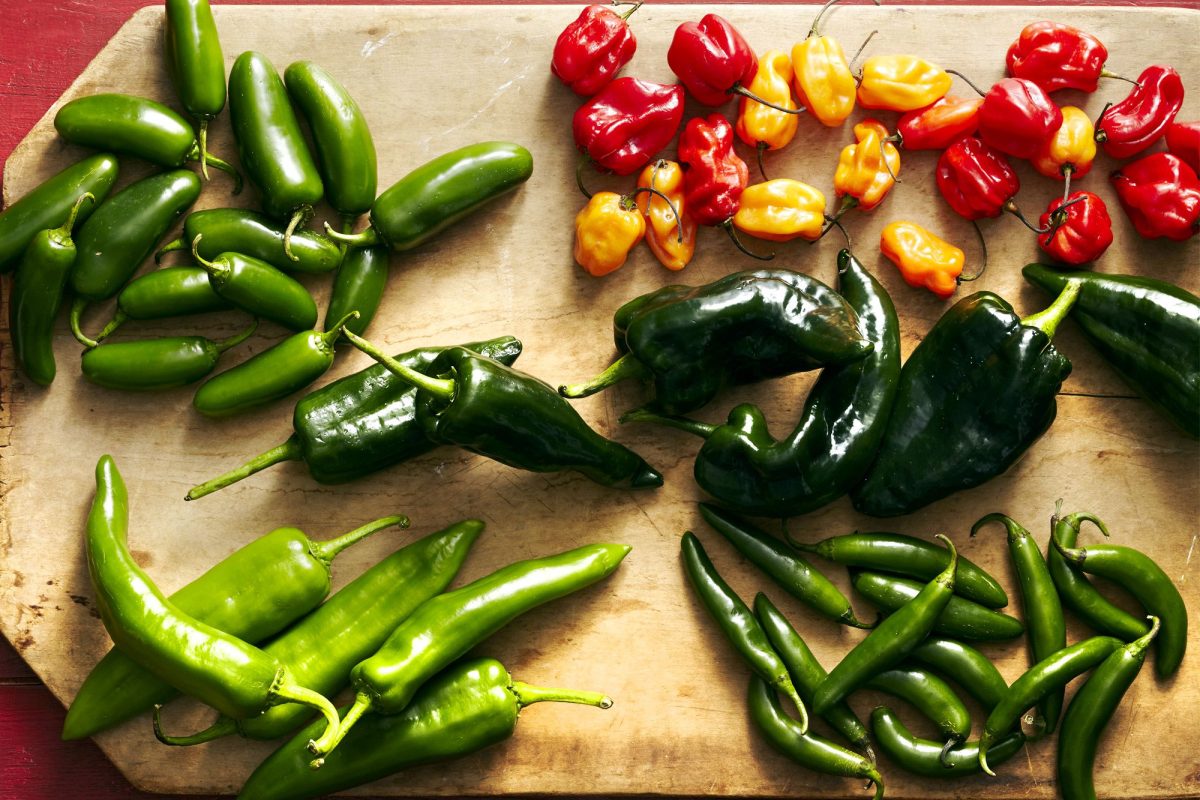
(Capsicum annuum) – VINEDALE (1952) ws bred at the Horticultural Experiment Station, Vineland, ON, and received an All American Selections (AAS) award as an early, high-yielding cultivar. The medium-sized tapering fruits ripen green to red. BELGIAN RED is good yielding with fruits slightly smaller than Vinedale, ripening yellow to orange-red.
BOLDOG HUNGARIAN SPICE is a pepper for drying to make paprika. The crimson fruits are about 5" x 1" and have just a touch of heat. Can also be used fresh in cooking and salads.
HOT HUNGARIAN WAX has banana shaped fruit, ripeneing yellow to red. Yield is good, maturity is early and the fruit is mildly hot.

Packet (about 25 seeds) @ $2.50


Beans, Peas & other Pulse Crops | Corn | Grain & Seed Crops | Leaf Vegetables
Root Vegetables | Tomato Family | Vine Crops | Flowers and Decorative Plants | Home